English
 Deutsch
 Français
 Español

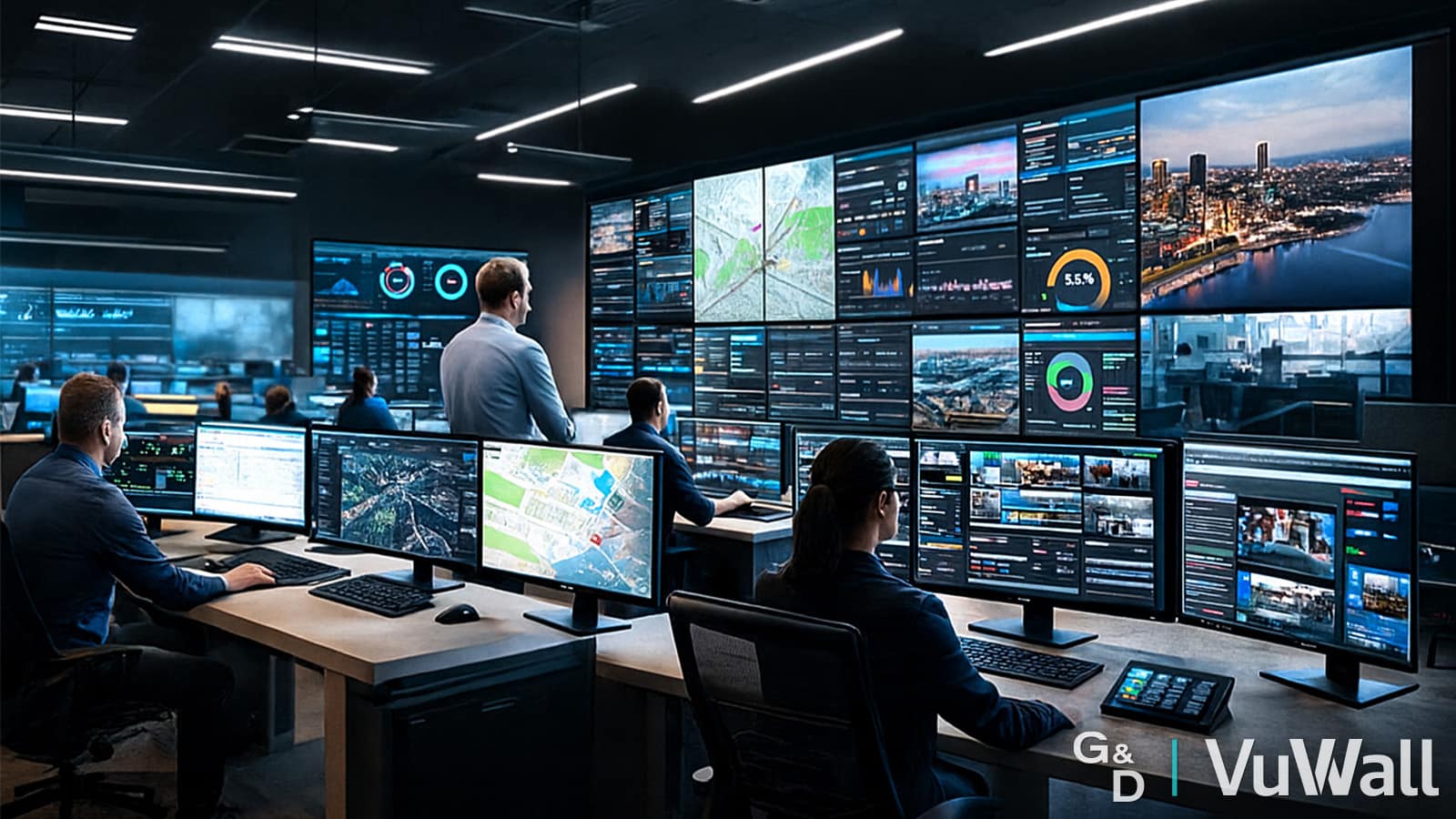
L'évolution des salles de contrôle : Pourquoi le KVM flexible et unifié est plus important que jamais
TL;DR: Control rooms are more complex than ever, and no single KVM technology can meet every operational need. High-performance dedicated KVM, performance KVM-over-IP, and scalable KVM-over-IP remote access solutions all play different roles — and the future depends on managing them together, not choosing between them. By unifying KVM, visualization, and video wall management on a single integrated platform, operators gain faster workflows, better situational awareness, and more reliable decision-making during mission-critical moments. VuWall and G&D are working together to make this seamless, flexible, operator-centric ecosystem the new standard in modern control rooms.
Les salles de contrôle ont considérablement évolué au cours de la dernière décennie.
Ce qui était autrefois des environnements relativement restreints, souvent construits autour d'un seul système, d'un seul flux de travail et d'un seul ensemble d'exigences de l'opérateur, s'est transformé en écosystèmes hautement dynamiques et interconnectés. Aujourd'hui, les opérateurs doivent gérer plus de données, plus d'applications et plus de sources géographiquement distribuées que jamais auparavant. Par conséquent, les technologies qui prennent en charge ces espaces critiques doivent évoluer pour atteindre de nouveaux niveaux de flexibilité, de rapidité et de fiabilité.
Un domaine où cette transformation est particulièrement visible est celui de la technologie KVM (clavier, vidéo, souris). Il n'est plus question de qui L'approche KVM est la meilleure. Il s'agit plutôt d'une orchestration intelligente des éléments suivants multiples KVM technologies—classic matrix KVM (dedicated KVM), performance KVM-over-IP, and KVM-over-IP & Video Walls —within a unified workflow.
Chez VuWall, en collaboration avec notre société sœur G&D, we are seeing firsthand how control rooms around the world are redefining what’s possible by embracing this integrated, platform-driven approach – it’s the convergence of KVM and Video Walls.
Le mythe du KVM à taille unique
Il est tentant de vouloir une technologie KVM unique qui résoudrait tous les problèmes. Cependant, il n'en est rien, les opérations de la salle de contrôle d'aujourd'hui sont trop complexes pour qu'on puisse leur appliquer une solution unique et cette attente n'est tout simplement pas réaliste.
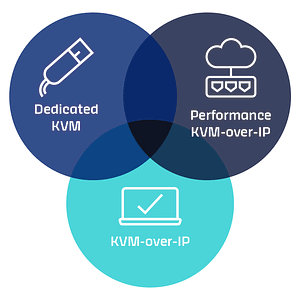
Chaque saveur de KVM a une fonction différente :
- Dedicated KVM excelle dans les environnements où une latence ultra-faible et une fidélité d'image sans compromis sont des exigences absolues.
- Performance KVM-over-IP offre une évolutivité, une flexibilité sur de longues distances et la possibilité d'acheminer les signaux à travers les bâtiments, les campus et même les réseaux mondiaux.
- KVM sur IP offers efficient remote access that’s ideal for certain types of monitoring or situational tasks.
Différentes sources, différents besoins des opérateurs, différents environnements - chacun nécessite un outil différent. Et c'est exactement ce qu'il faut faire : les salles de contrôle modernes exigent tous d'entre eux.
Là où les opérateurs ont besoin d'une performance de pointe
Au poste de travail de l'opérateur, la réactivité est essentielle. Les opérateurs interagissent avec des données en temps réel, passent d'une source critique à une autre et réagissent à des situations qui évoluent. Leurs outils ne peuvent pas être décalés, tamponnés, hésitants ou introduire des artefacts visuels..
Aujourd'hui, les opérateurs ont besoin :
- qualité parfaite au pixel près
- commutation instantanée
- une expérience utilisateur transparente et sans friction
- des postes de travail silencieux et ergonomiques
- accès efficace à plusieurs systèmes à la fois
This is where dedicated KVM and high-performance KVM-over-IP solutions—like those from G&D-demeurent essentielles. Les opérateurs ne peuvent tout simplement pas faire de compromis sur la réactivité, notamment dans des secteurs tels que le contrôle du trafic aérien, le contrôle des processus et la radiodiffusion.
Quand le mur vidéo a besoin de flexibilité
Le mur d'images a une autre mission. Alors que les opérateurs mettent l'accent sur la précision et l'interactivité, le mur d'enceinte se concentre sur les aspects suivants la veille situationnelle. Il doit ingérer et visualiser de nombreuses sources simultanément, à partir de nombreux systèmes, sur de nombreux sites.
Les salles de contrôle bénéficient de :
- l'affichage transparent de contenus hybrides
- visualisation multi-sites/multi-systèmes
- évolutivité sur plusieurs murs ou pièces
- des flux de travail intuitifs qui n'alourdissent pas la tâche des opérateurs
- la possibilité de visualiser rapidement toutes les sources pertinentes
C'est ici que La plateforme TRx de VuWall joue un rôle central, offrir la souplesse nécessaire à la gestion et à la visualisation du contenu à partir de n'importe quel système KVM, n'importe quel encodeur, n'importe quelle source IP et n'importe quelle application.
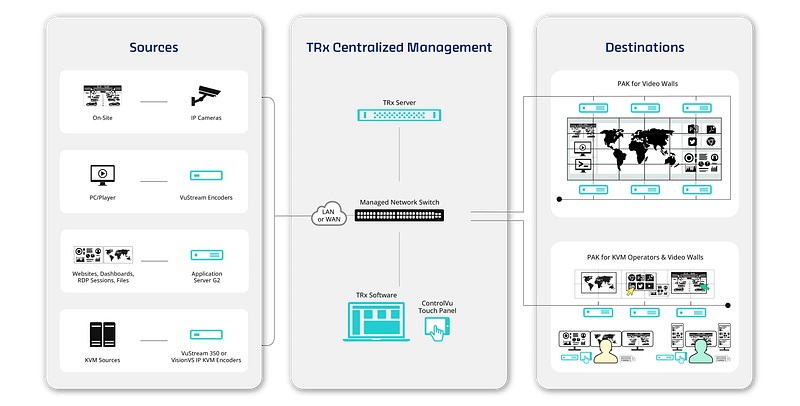
IMAGE: Diagramme de flux de travail de l'écosystème VuWall. CLIQUEZ ICI pour découvrir comment le processeur de mur vidéo VuWall PAK apporte la flexibilité nécessaire aux murs vidéo.
Visual the Difference
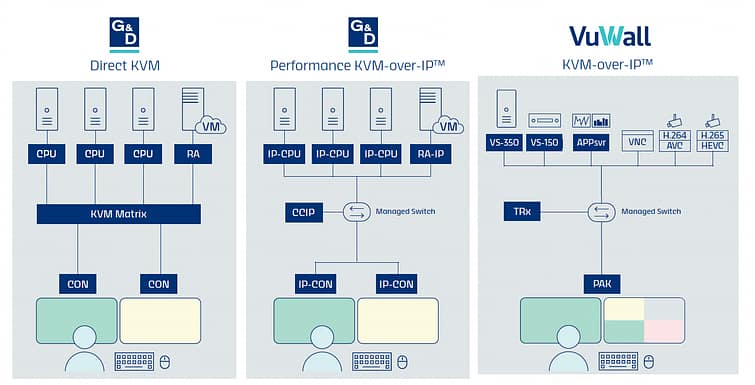
The industry’s most complete portfolio of KVM and Video Wall Management solutions designed to meet any operational requirements.
Pourquoi l'intégration n'est plus facultative
Dans les salles de contrôle modernes, l'intégration transparente est devenue essentielle pour répondre aux défis posés par l'assemblage de systèmes disparates. Les systèmes se multiplient et les flux de données deviennent de plus en plus complexes, les outils déconnectés ralentissent les opérateurs et augmentent le risque d'erreurs.
Parmi les conséquences de la non-satisfaction des besoins d'intégration, on peut citer
- différentes interfaces utilisateur
- des flux de travail incohérents
- gestion fragmentée des sources
- difficulté à acheminer le bon contenu au bon moment
- des exigences plus élevées en matière de formation
- risque accru d'erreur de l'opérateur sous pression
En revanche, la solution est très simple : un flux de travail unifié alimenté par des plateformes qui parlent le même langage.
Plus que jamais, les salles de contrôle doivent investir dans des solutions qui permettent des intégrations profondes entre la gestion des murs vidéo, la connectivité KVM et le traitement vidéo. Le résultat est un environnement unique et centralisé dans lequel les opérateurs bénéficient du routage, de la commutation, de l'accès et de la visualisation de tous les éléments à partir d'une interface unifiée. Cela signifie qu'il n'est plus nécessaire de jongler avec les systèmes, ni de confondre les ensembles d'outils ; que la prise de décision rapide et critique.
Quand chaque seconde compte
Dans les scénarios de crise - opérations d'urgence, missions de défense, centres de dispatching ou tout autre environnement où les enjeux sont importants - la capacité à fournir instantanément les bonnes informations aux bonnes personnes est indispensable.
Une plateforme unifiée et intégrée garantit :
- les opérateurs ne perdent pas un temps précieux à rechercher du contenu
- les décideurs disposent toujours d'une image complète en temps réel
- les signaux circulent efficacement entre les murs d'images, les postes de travail et les sites distants
- la collaboration se fait sans friction, que ce soit dans la même pièce ou sur plusieurs sites
- les flux de travail restent cohérents, prévisibles et fiables
Il ne s'agit pas d'une question de commodité. Il s'agit de la résilience opérationnelle.
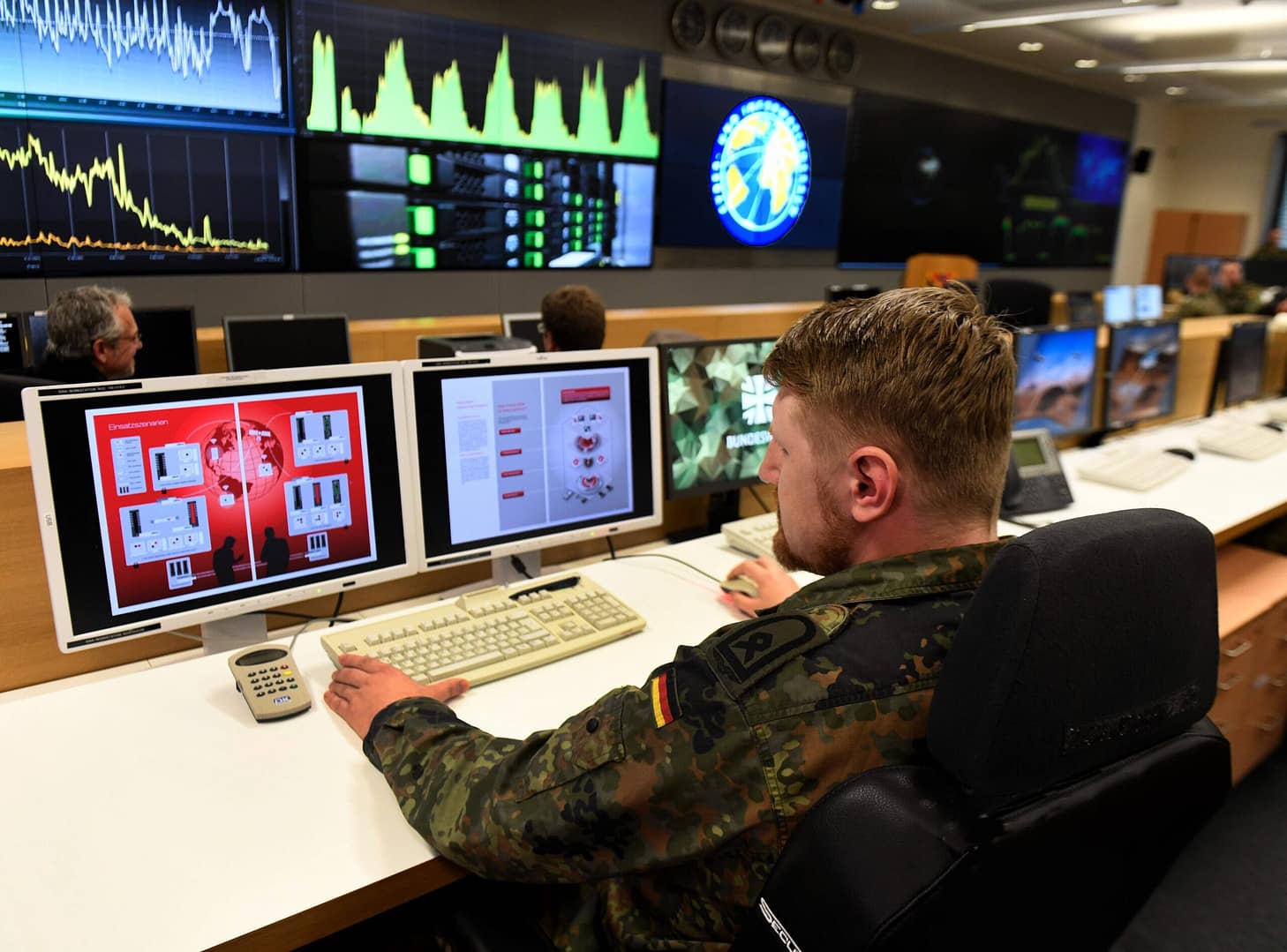
IMAGE: VuWall Customer Site : Centre de commandement de l'armée nationale européenne. Le processeur de mur vidéo VuWall PAK apporte la flexibilité nécessaire aux murs vidéo dans les environnements de salles de contrôle critiques.
CLIQUEZ ICI pour lire l'étude de cas complète.
L'avenir : KVM multitechnologie, unifié sous une plate-forme unique
The future of KVM isn’t about choosing between dedicated or IP-based systems. The most forward-thinking control rooms are doing all three—strategically, intentionally, and seamlessly.
L'avenir des salles de contrôle réside dans :
- des plateformes unifiées qui éliminent la complexité
- des solutions évolutives qui s'adaptent à l'évolution des flux de travail
- des systèmes intégrés qui associent la visualisation et le contrôle
- les partenariats technologiques (comme VuWall +) G&D) qui assurent une interopérabilité de bout en bout
- permettre aux opérateurs de travailler plus rapidement, plus intelligemment et avec plus de confiance
Les salles de contrôle du futur ne seront pas définies par les technologies qu'elles adoptent, mais par la fluidité avec laquelle ces technologies fonctionnent ensemble.
Réflexions finales
En tant qu'entreprise profondément ancrée dans les environnements critiques, VuWall - ainsi que notre société sœur G&D-s'engage à faire avancer cette évolution. Notre vision commune est simple : créer des écosystèmes unifiés, centrés sur l'opérateur, qui permettent aux organisations de prendre des décisions éclairées sans avoir à supporter le fardeau de la complexité technique.
Les KVM continueront d'évoluer. Les murs d'images continueront d'évoluer. Les salles de contrôle continueront d'évoluer. Mais le besoin d'intégration, de flexibilité et d'expérience utilisateur transparente restera constant.
And that’s exactly where the future is headed.
If you’re working on a control room project, our experts are here to help.
Reach out to our team to book schedule a demo.